Why You Really Feel Hungover: 5 Biological Causes and How to Beat Them
Hangovers aren't random punishment — they're your body's response to a chemical overload, sleep debt, and nutrient loss. A chemical engineer's guide to what's actually happening the morning after.

Hangovers aren’t random punishment. They’re your body responding to a chemical overload, sleep debt, and nutrient loss. Once you understand the biology, the symptoms — and how to prevent them — get a lot more manageable.
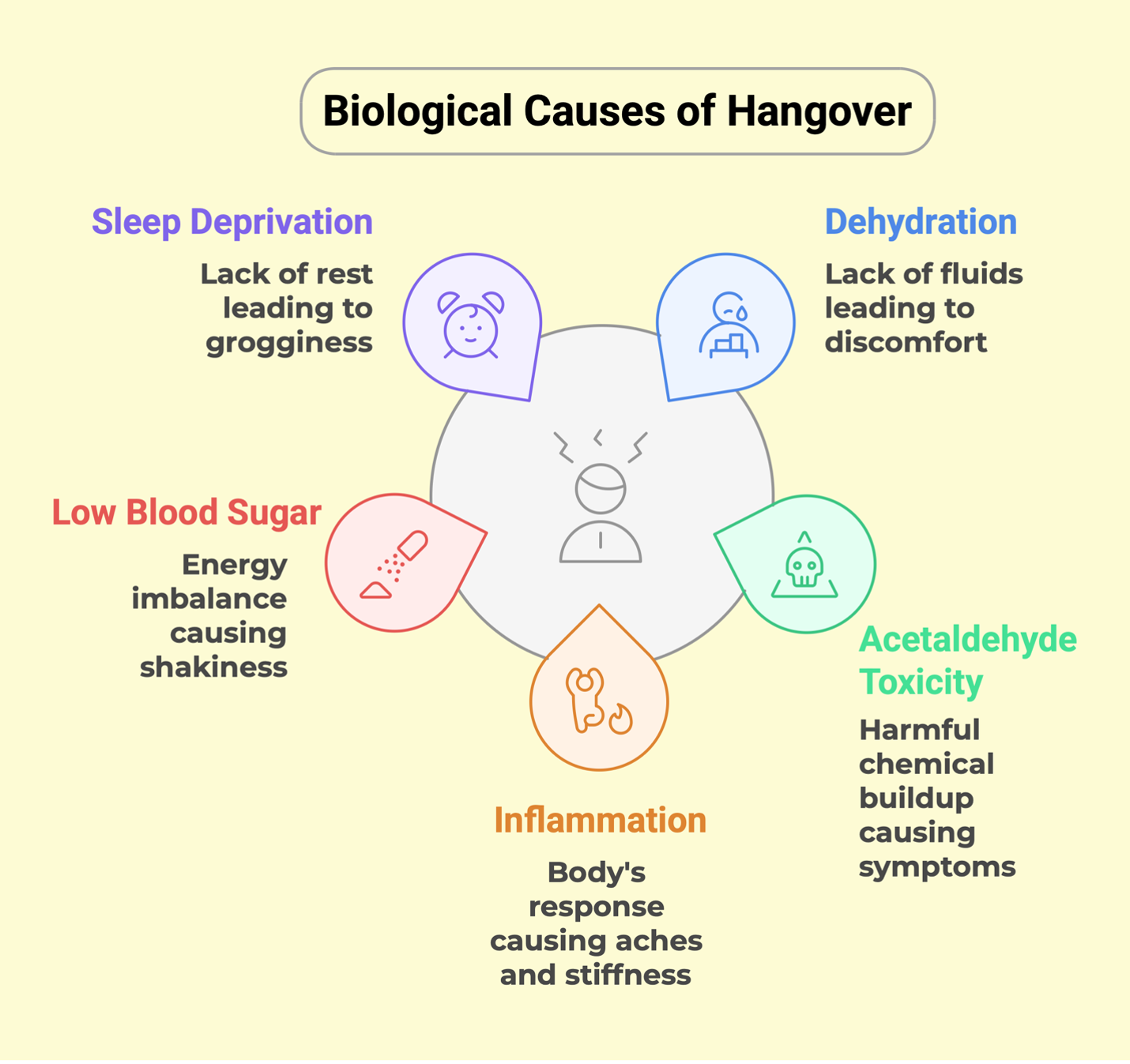
I spent years as a chemical engineer before opening Border Brewing Company in 2015, and one thing I’ve never stopped finding interesting is what alcohol actually does to the body between when you drink it and when you wake up. The hangover isn’t one thing. It’s five things happening at once — dehydration, a toxic metabolite, disrupted sleep, blood sugar chaos, and inflammation. If you know the causes, you can manage the symptoms much more effectively, and in some cases avoid them altogether.
Here’s what’s actually happening when you feel hungover, in the language of biology rather than folk wisdom — plus the countermeasures that are backed by more than just tradition.
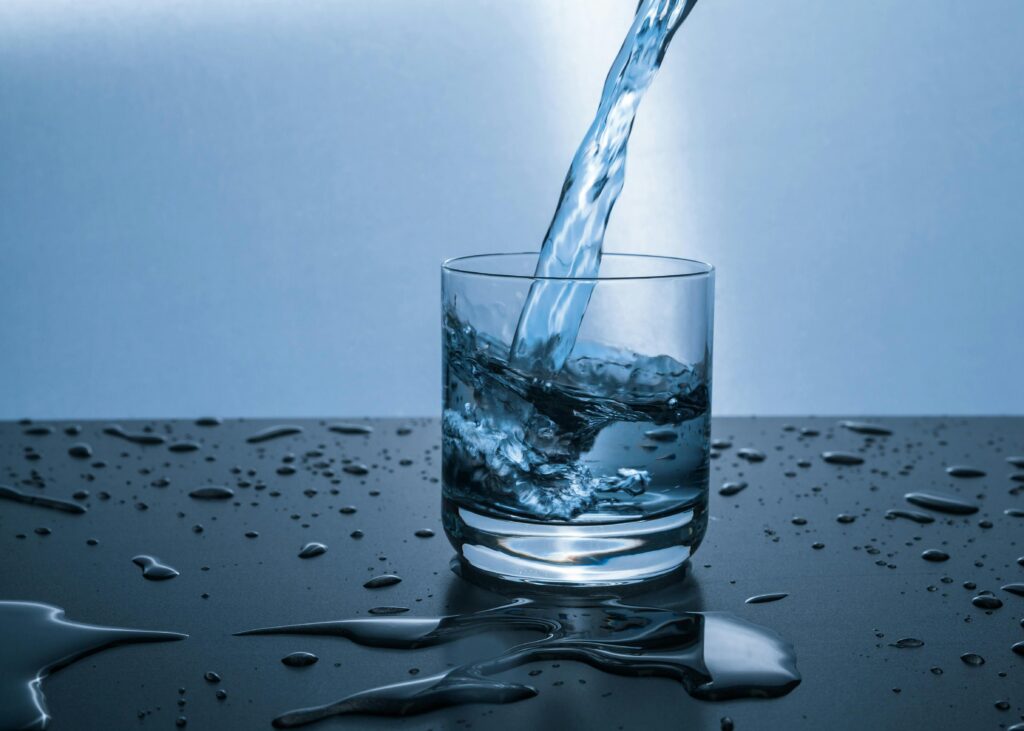
1. Dehydration — the one everyone knows about
Alcohol suppresses vasopressin, the antidiuretic hormone that tells your kidneys to hold onto water. With vasopressin blocked, your kidneys stop reabsorbing water and start dumping it into your bladder. That’s why beer and cocktails make you visit the bathroom more than the equivalent volume of water would.
The result: over the course of an evening, you’re losing more water than you’re taking in — even if you feel like you drank plenty. By the time you’re asleep, you’re behind on hydration by an amount your body needs the morning to rebuild.
What you feel: dry mouth, headache, fatigue, dizziness when you stand up. The headache in particular is largely dehydration — brain tissue actually shrinks slightly when you’re dehydrated, pulling on the pain-sensitive membranes around the skull.
What actually helps:
- Drink water WITH your drinks, not just afterward. One glass of water per drink is a good rule of thumb.
- Prioritize hydration before bed, not just in the morning. A big glass of water before you sleep gets absorbed while you rest.
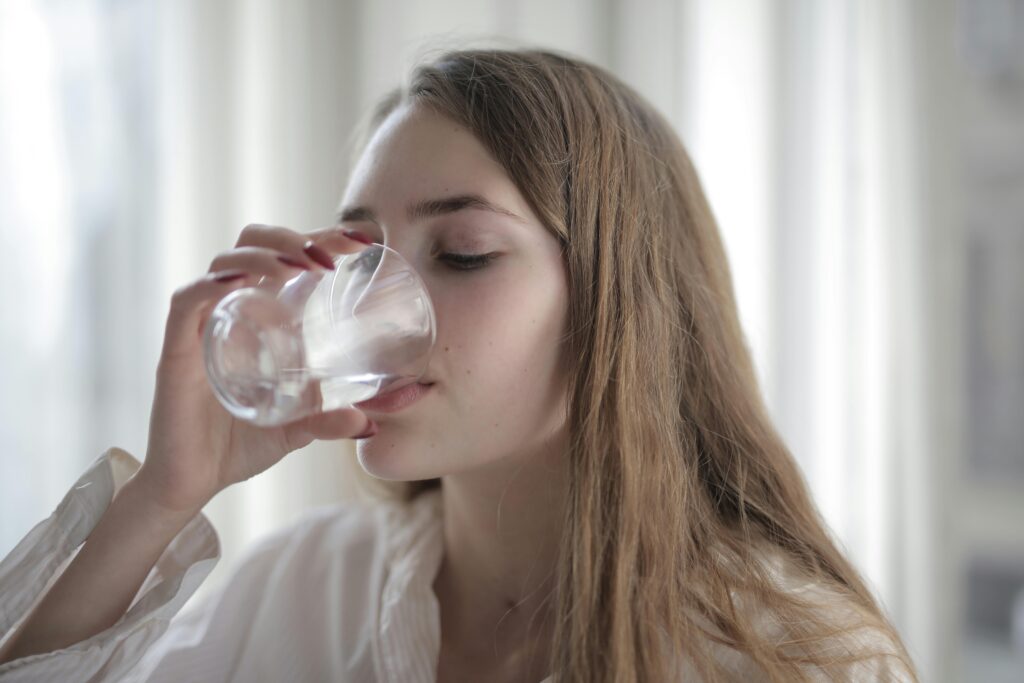
- Electrolytes matter more than volume alone. Coconut water, a hydration mix, or even a light salted broth restores what plain water can’t.
- In the morning, room-temperature water absorbs faster than ice-cold water.
2. Acetaldehyde — the real hangover villain
When your liver processes alcohol, it doesn’t turn it directly into something harmless. Alcohol first becomes acetaldehyde, a compound about 10-30 times more toxic than alcohol itself. Acetaldehyde is what causes flushed skin, rapid heartbeat, sweating, and nausea — and it lingers in your system while your liver works to convert it into acetate (which is harmless) and eventually water and carbon dioxide.
The catch: your liver has a fixed processing rate, roughly one standard drink per hour. Drink faster than that, and acetaldehyde piles up in the bloodstream. The more that accumulates and the longer it hangs around, the more pronounced the hangover.
This is also why some people — particularly some of East Asian descent — feel hangover-like symptoms almost immediately when drinking. About 40% of people of East Asian descent carry a genetic variant that produces a less-effective version of the enzyme that clears acetaldehyde. It’s called ALDH2 deficiency, and it’s the biological reason for what’s colloquially called “Asian flush.”
What actually helps:
- Slow down. The single most effective thing you can do is space out your drinks so your liver keeps up.
- Eat before and while you drink. Food slows alcohol absorption and gives your liver time to keep pace.
- Choose your drinks. Clear spirits (vodka, gin) and lighter beers produce less acetaldehyde than darker spirits (bourbon, red wine) and cocktails with lots of sugars, which contain compounds called congeners that add to the toxic load.
3. Sleep disruption — the reason you feel wrecked even after eight hours
Alcohol makes you fall asleep faster, which is why it’s traditionally been associated with “sleeping it off.” What actually happens after you fall asleep is far less restful.
In the first half of the night, alcohol suppresses REM sleep — the deep, restorative phase associated with memory, mood regulation, and cognitive function. In the second half of the night, as your body metabolizes the alcohol, you experience “REM rebound” — abnormally intense REM sleep, often accompanied by vivid dreams, restlessness, and sometimes waking multiple times. You may also snore more, breathe more shallowly, and have your body temperature drop unevenly.
The result: your sleep architecture is fragmented, and you wake up unrested even after 7-8 hours. This is why “just sleeping in longer” doesn’t cure a hangover — the sleep you’re getting isn’t good sleep.
What actually helps:
- Stop drinking at least 3 hours before bed. Give your body a chance to metabolize most of the alcohol before you sleep.
- Cool bedroom, dark room. Since alcohol messes with body temperature and sleep depth, controlling your sleep environment matters more, not less.
- Avoid stacking a hangover on top of a caffeine crash. Skip the late-night espresso martinis.
4. Blood sugar drop — the shaky-hands, foggy-headed morning
While your liver is busy metabolizing alcohol, it deprioritizes other functions — including releasing stored glucose (glycogen) into your bloodstream. In healthy metabolism, your liver constantly tops up your blood sugar between meals. When it’s overwhelmed with processing alcohol, that glucose release slows or stops.
The result: hypoglycemia, or abnormally low blood sugar, especially in the morning. Symptoms include lightheadedness, shakiness, sweating, irritability, and that specific “I can’t think straight” fog.
This effect is amplified if you drank on an empty stomach or if you’re insulin-resistant. It’s also why sugary “hangover cures” (sodas, fruit juice) can actually help in the short term — they spike blood sugar back up. Just know it’s a short-term fix that trades one crash for another.
What actually helps:
- Eat a real breakfast the next morning: something with protein, complex carbs, and fat. Eggs, toast, avocado. Not just a bagel or a sugary pastry.
- Skip the OJ-first, coffee-first, or sports-drink-first approach. Get some protein into your system to stabilize blood sugar for the whole morning, not just the next 30 minutes.
- Complex carbs (oatmeal, whole grain toast) give you steady glucose without the spike-and-crash.
5. Inflammation and vasodilation — the aches, the pounding, the “why does everything hurt”
Alcohol triggers a mild inflammatory response throughout the body. Your immune system releases cytokines — molecules that normally help fight infection — but which also cause aches, fatigue, difficulty concentrating, and general malaise. It’s the same class of response that makes you feel awful when you have the flu.
At the same time, alcohol is a vasodilator — it makes blood vessels expand. In the brain, this contributes to that pounding, throbbing headache that shows up around hour 6-8 after your last drink, as the acetaldehyde and inflammation peak.
The magnitude of the inflammatory response varies significantly between drink types. Beer, wine, and darker spirits contain congeners, sulfites, tannins, and other compounds that amplify the inflammatory load. Clear spirits produce less. Sugary cocktails often produce more because your body is dealing with both an alcohol load AND a sugar crash inflammation on top.
What actually helps:
- NSAIDs (ibuprofen, aspirin) reduce inflammation and pounding-headache symptoms. Avoid acetaminophen (Tylenol) — it’s processed by the liver, which is already overworked, and combining it with alcohol can cause serious liver damage.
- Anti-inflammatory foods: eggs (which also contain cysteine, which helps process acetaldehyde), ginger, turmeric, berries.
- A short walk or light movement. Not a workout — but gentle movement helps blood flow and can ease inflammation-driven achiness.
The prevention playbook
Understanding the biology gives you a clear prevention strategy. In no particular order:
- Eat before you drink. Full stomach = slower alcohol absorption = more time for your liver to keep pace.
- One water per drink. Non-negotiable if you want to feel human tomorrow.
- Slow down. Your liver processes one standard drink per hour. Stack faster than that and acetaldehyde compounds.
- Choose lighter, cleaner drinks. Clear spirits and lighter beers over dark spirits, sugary cocktails, and heavy reds.
- Stop drinking earlier in the evening. Cutting off 2-3 hours before bed gives your body time to metabolize most of the alcohol before you sleep.
- Electrolytes before bed. Not just water — a hydration mix, coconut water, or a light salt-and-lemon glass of water.
- Real breakfast the next morning. Protein + complex carbs, not sugar.
Or: drink lower ABV and let your liver keep up
The most reliable way to prevent a hangover is to drink less alcohol in total. Not fewer drinks necessarily — less alcohol. Those are different levers, and the second one is easier to pull.
The math is simple. Your liver clears roughly one standard drink per hour, and a standard drink is defined by alcohol content, not by glass size. An 8% imperial IPA is close to two standard drinks in one glass. A 4% blonde is about half of one. Drink three of the first and you’ve handed your liver six hours of work in an evening. Drink three of the second and you’ve handed it ninety minutes.
That’s why session beers exist, and it’s why we brew a range rather than chasing ABV. Strawberry Blonde sits at 4%. Backyard Lager is 4.4%. Lima Fresca is 5%. You can spend a long afternoon on any of them and wake up fine. Shiftie at 8% is a different proposition, and worth treating like one.
Real approach for a night out: alternate. A craft beer, then a water or a mocktail from the bar menu, then another beer. You’ve halved your alcohol intake without halving your evening. Your liver keeps up. Your hydration stays close to level. Tomorrow morning is a coffee, not a recovery mission.
We also brew with obsessive attention to water quality — which we’ve written about in Bottled vs. Tap Water: 5 Key Differences You Should Know. The water going into your beer matters. So does the water going into your body the night of and the morning after.
The bottom line
Hangovers aren’t a mystery, and they’re not a punishment. They’re five overlapping biological responses to a chemical (ethanol) your body treats as a controlled toxin. Understanding the causes doesn’t just help you handle them better — it lets you make smarter decisions about how you drink, what you drink, and when to swap in a glass of water instead.
At Border, we brew because we love craft beer. But we also believe drinking should be a pleasure, not a penalty. Learn the biology, drink like you know it, and Sunday mornings can stay yours.
Related Reading
- Bottled vs. Tap Water: 5 Key Differences You Should Know — Why water quality matters to what you brew and what you drink.
- Our Craft Beers — The full lineup, including lower-ABV options.
- Brewery & Taproom — Come visit and see what’s pouring.
Cheers!
Want more? Follow along on Instagram or read more from the Border Brewing blog.
Come Visit the Taproom